





Planning your first ski trip? Discover what to wear skiing, what to pack, and what to expect in your first lessons
Tuesday 2nd December 2025
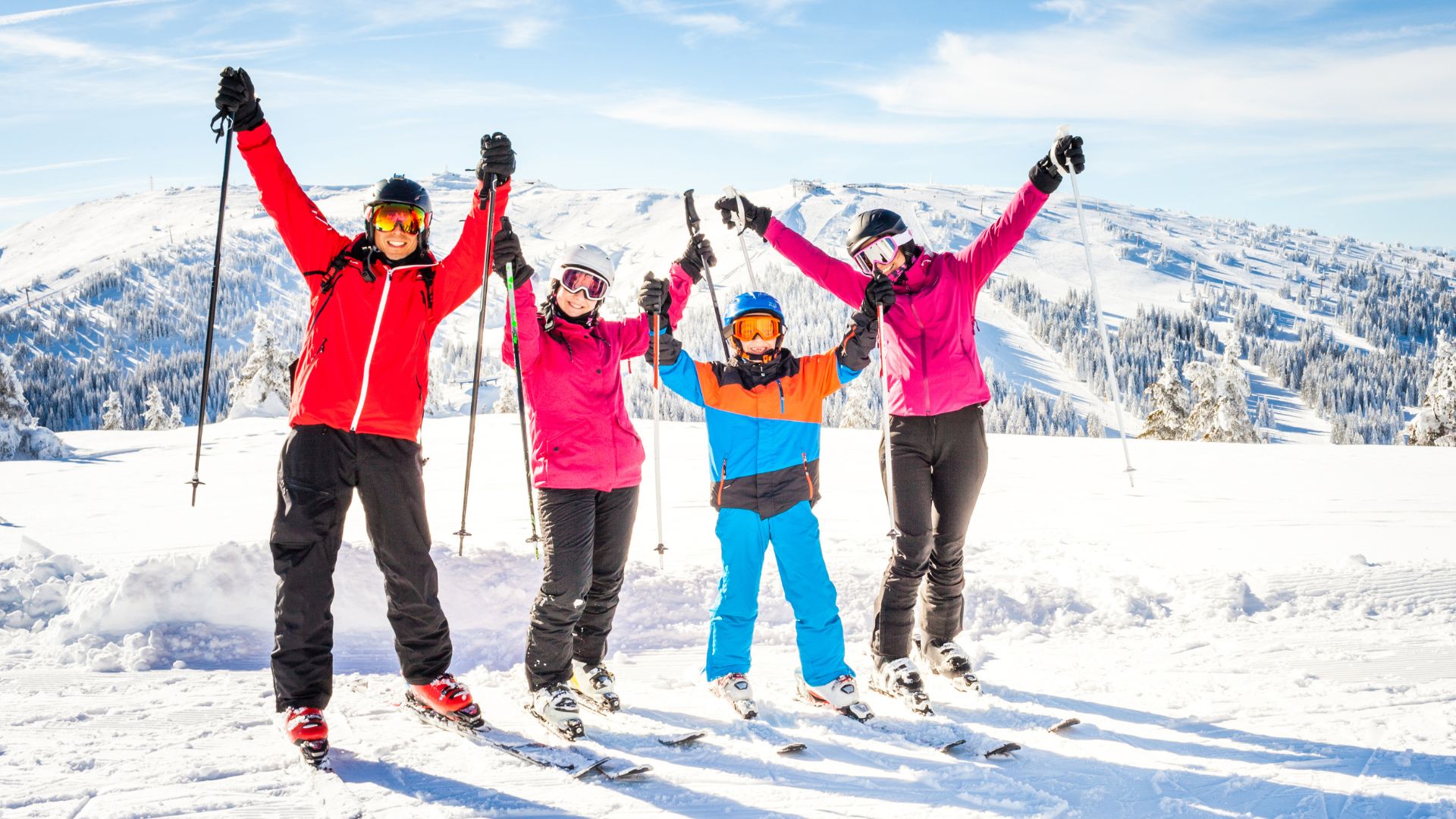
if you’re planning your very first skiing holiday in France, whether it’s a family trip or an adventure with friends, you’re in for an unforgettable experience. Imagine crisp mountain air, snow-covered peaks, and that euphoric feeling when you finally glide down your first slope.
But before you get there, you’ll want to make sure you’re properly prepared.
From finding out what to wear skiing, to what happens in your first ski lessons, here’s a complete guide to help you hit the slopes with confidence.
Packing for your first ski trip
Packing for a ski holiday is very different to packing for a beach or city break. You’ll need to think about warmth, waterproofing and comfort. The good news is that once you get the basics right, you’ll be ready for almost anything the mountains throw at you.
Start with layers
A good base layer is essential. Think thermal tops and bottoms made of a moisture-resistant material. On top of that, add a warm mid-layer such as a fleece or wool jumper. Your outer layers should be purpose made waterproof and windproof ski jacket and trousers. These will keep you dry and protect you from icy winds and moisture.
Don’t forget ski accessories
A good pair of ski gloves are essential, as well as thick ski socks. A neck warmer or snood will help keep the chill off your face and neck, while goggles will protect your eyes from snow glare. On sunny days, sunglasses are a must.
The easily forgotten extras
Remember the little extras. Sunscreen, lip balm (with SPF), and reusable water bottles are all lifesavers when exposed to the mountain air.
Having these essentials ready will save you from last-minute panics and make sure you can focus on enjoying the snow.
What to wear when not on the slopes
It’s easy to forget about what you’ll wear off the slopes too. Bring snow boots or sturdy walking shoes for getting around the resort, as well as a warm hat and comfy clothes. Even swimwear if your accommodation has a hot tub or spa!
Hiring ski equipment in France
If it’s your first ski trip, there’s no need to buy all your gear. Most resorts in France have plenty of rental shops where you can hire everything you and the family will need, including; skis, boots, poles and helmets. Often, these rental shops can be found very close to your accommodation.
You can receive great offers with SkiSet here:
Hiring ski equipment online
Hiring equipment online from a retailer local to your accommodation before you travel can be cheaper and guarantees your equipment will be ready when you arrive. It will also help you avoid queues and secure the right sizes, especially if you’re planning a family trip during peak seasons such as Christmas and February half-term.
The staff will fit your gear for comfort and safety, adjusting your bindings and making sure your boots fit correctly. A good fit makes all the difference on the slopes.
You can also rent clothing like jackets and trousers if you don’t want to invest in full ski gear just yet.
When returning your gear, ensure to keep it as clean and dry as possible. This keeps everyone happy and gets you one step closer to that après-ski hot chocolate!
What to wear for ski lessons
When you head to your first lesson, comfort and practicality is key.
You’ll spend a lot of time standing, learning how to balance, and taking in new instructions and safety guidelines, so you’ll want to stay warm.
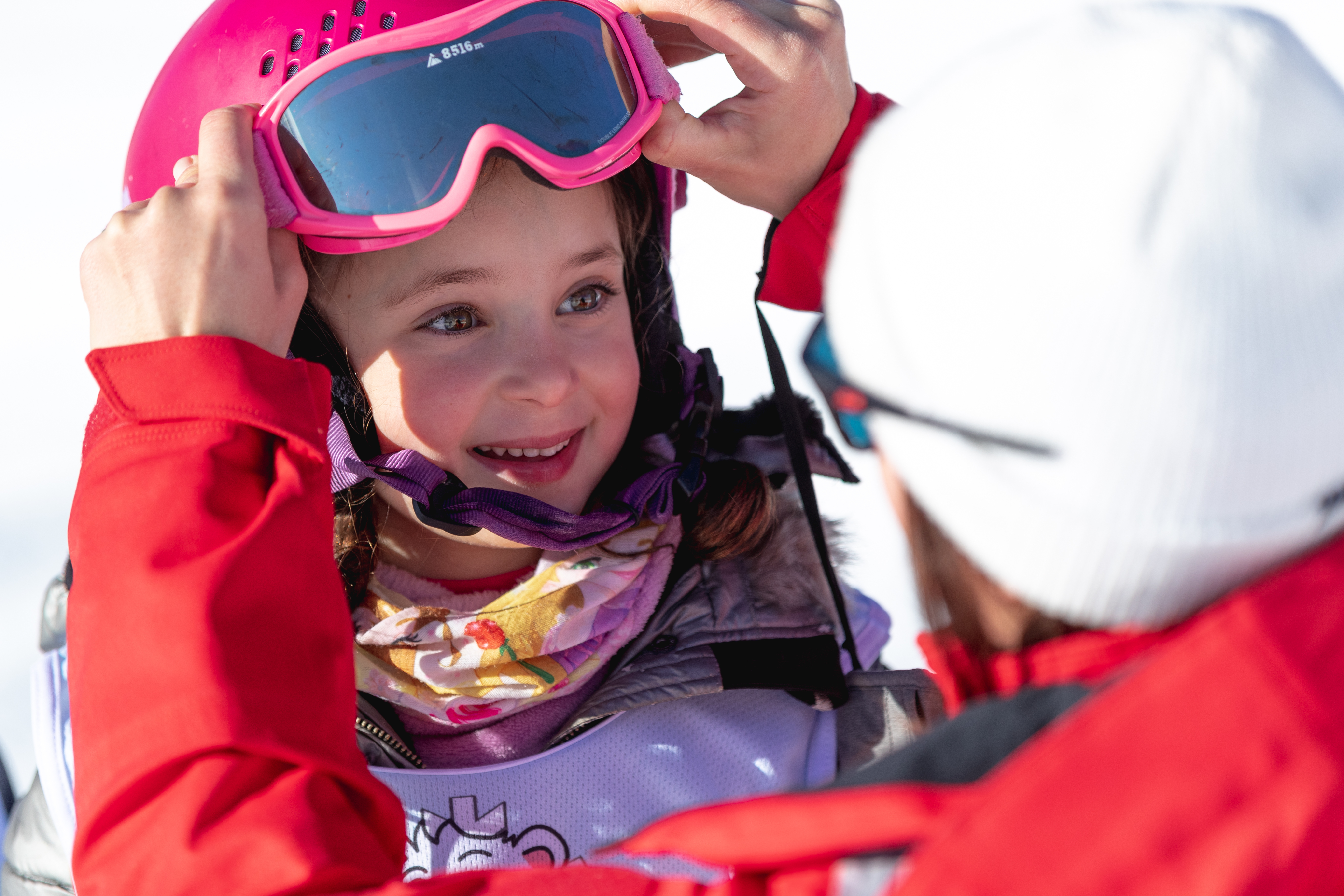
A helmet is paramount with most resorts requiring them for adults and children learning to ski.
Your ski jacket and trousers should fit well but still allow you to move freely.
Underneath, wear your base and mid-layers, and make sure your ski socks fit smoothly inside your boots (no bunching or folding).
Don’t forget your goggles or sunglasses - even on cloudy days, the snow reflects a surprising amount of light.
What to expect from ESF ski lessons
On your first day, you’ll meet your instructor at the designated meeting point. The lesson will start on a flat or very gentle slope where you’ll learn the absolute basics, such as how to put on your skis, how to move get moving, and most importantly, how to stop.
Each day, you’ll build confidence and progress to slightly steeper slopes at your own pace. ESF lessons are structured to help you improve steadily - and the instructors are experts at keeping things fun, especially for children learning at a young age.
By the end of your lessons, you’ll hopefully be able to glide down an easy run and feel a real sense of achievement. You might even receive a certificate or badge showing your level - a great souvenir for kids and adults alike!
Skill levels and progression
ESF lessons are designed for all ages and abilities, but as a first-timer, you’ll start as a complete beginner. Over time, you’ll move up through levels as your skills improve.
Children’s lessons start at 18 months – 3 years, moving up to 3-5 years with Club Piou-Piou, and ending with lessons for 5-12 year olds.
Lessons for adults follow a simple structure from beginner to intermediate and advanced.
Don’t worry if progress feels slow at first - everyone learns at their own pace, and your instructor will make sure you’re safe and supported. Even falling over is part of the fun (and trust us, everyone does it!).
Final tips for first-timers
Expect your first day to feel a little awkward, but that’s totally normal. Everyone feels unsteady at first. The key is to relax, listen to your instructor, and celebrate small wins.
Weather in the mountains can change fast, so layer up and carry a spare hat or gloves. Drink plenty of water and take short breaks to avoid fatigue, especially at altitude.
Remember, it’s not a race! Learning to ski is as much about enjoying the mountain views, fresh air and family time as it is about technique.
Ready to hit the slopes?
Your first ski holiday in France will be filled with excitement, laughter, and plenty of snow-covered memories. With the right gear, the right mindset, and a great instructor, you’ll be skiing with confidence in no time.
If you want to learn more, explore our lesson options for adults, children and families, or take a look the ESF ski schools to find out where you would like to go.
if you’re planning your very first skiing holiday in France, whether it’s a family trip or an adventure with friends, you’re in for an unforgettable experience. Imagine crisp mountain air, snow-covered peaks, and that euphoric feeling when you finally glide down your first slope.
But before you get there, you’ll want to make sure you’re properly prepared.
From finding out what to wear skiing, to what happens in your first ski lessons, here’s a complete guide to help you hit the slopes with confidence.
Packing for your first ski trip
Packing for a ski holiday is very different to packing for a beach or city break. You’ll need to think about warmth, waterproofing and comfort. The good news is that once you get the basics right, you’ll be ready for almost anything the mountains throw at you.
Start with layers
A good base layer is essential. Think thermal tops and bottoms made of a moisture-resistant material. On top of that, add a warm mid-layer such as a fleece or wool jumper. Your outer layers should be purpose made waterproof and windproof ski jacket and trousers. These will keep you dry and protect you from icy winds and moisture.
Don’t forget ski accessories
A good pair of ski gloves are essential, as well as thick ski socks. A neck warmer or snood will help keep the chill off your face and neck, while goggles will protect your eyes from snow glare. On sunny days, sunglasses are a must.
The easily forgotten extras
Remember the little extras. Sunscreen, lip balm (with SPF), and reusable water bottles are all lifesavers when exposed to the mountain air.
- Your handy packing checklist for your trip
- To make packing stress-free, here’s a simple checklist to tick off before you go:
- Warm base layers (top and bottoms)
- Fleece or wool jumper
- Waterproof ski jacket and trousers
- Helmet, gloves, and goggles
- Ski socks and snow boots
- Sunglasses, hat and neck warmer
- Sunscreen and lip balm
- Small backpack for snacks and water
- Travel documents, lift pass and insurance
Having these essentials ready will save you from last-minute panics and make sure you can focus on enjoying the snow.
What to wear when not on the slopes
It’s easy to forget about what you’ll wear off the slopes too. Bring snow boots or sturdy walking shoes for getting around the resort, as well as a warm hat and comfy clothes. Even swimwear if your accommodation has a hot tub or spa!
Hiring ski equipment in France
If it’s your first ski trip, there’s no need to buy all your gear. Most resorts in France have plenty of rental shops where you can hire everything you and the family will need, including; skis, boots, poles and helmets. Often, these rental shops can be found very close to your accommodation.
You can receive great offers with SkiSet here:
Hiring ski equipment online
Hiring equipment online from a retailer local to your accommodation before you travel can be cheaper and guarantees your equipment will be ready when you arrive. It will also help you avoid queues and secure the right sizes, especially if you’re planning a family trip during peak seasons such as Christmas and February half-term.
The staff will fit your gear for comfort and safety, adjusting your bindings and making sure your boots fit correctly. A good fit makes all the difference on the slopes.
You can also rent clothing like jackets and trousers if you don’t want to invest in full ski gear just yet.
When returning your gear, ensure to keep it as clean and dry as possible. This keeps everyone happy and gets you one step closer to that après-ski hot chocolate!
What to wear for ski lessons
When you head to your first lesson, comfort and practicality is key.
You’ll spend a lot of time standing, learning how to balance, and taking in new instructions and safety guidelines, so you’ll want to stay warm.
A helmet is paramount with most resorts requiring them for adults and children learning to ski.
Your ski jacket and trousers should fit well but still allow you to move freely.
Underneath, wear your base and mid-layers, and make sure your ski socks fit smoothly inside your boots (no bunching or folding).
Don’t forget your goggles or sunglasses - even on cloudy days, the snow reflects a surprising amount of light.
What to expect from ESF ski lessons
On your first day, you’ll meet your instructor at the designated meeting point. The lesson will start on a flat or very gentle slope where you’ll learn the absolute basics, such as how to put on your skis, how to move get moving, and most importantly, how to stop.
Each day, you’ll build confidence and progress to slightly steeper slopes at your own pace. ESF lessons are structured to help you improve steadily - and the instructors are experts at keeping things fun, especially for children learning at a young age.
By the end of your lessons, you’ll hopefully be able to glide down an easy run and feel a real sense of achievement. You might even receive a certificate or badge showing your level - a great souvenir for kids and adults alike!
Skill levels and progression
ESF lessons are designed for all ages and abilities, but as a first-timer, you’ll start as a complete beginner. Over time, you’ll move up through levels as your skills improve.
Children’s lessons start at 18 months – 3 years, moving up to 3-5 years with Club Piou-Piou, and ending with lessons for 5-12 year olds.
Lessons for adults follow a simple structure from beginner to intermediate and advanced.
Don’t worry if progress feels slow at first - everyone learns at their own pace, and your instructor will make sure you’re safe and supported. Even falling over is part of the fun (and trust us, everyone does it!).
Final tips for first-timers
Expect your first day to feel a little awkward, but that’s totally normal. Everyone feels unsteady at first. The key is to relax, listen to your instructor, and celebrate small wins.
Weather in the mountains can change fast, so layer up and carry a spare hat or gloves. Drink plenty of water and take short breaks to avoid fatigue, especially at altitude.
Remember, it’s not a race! Learning to ski is as much about enjoying the mountain views, fresh air and family time as it is about technique.
Ready to hit the slopes?
Your first ski holiday in France will be filled with excitement, laughter, and plenty of snow-covered memories. With the right gear, the right mindset, and a great instructor, you’ll be skiing with confidence in no time.
If you want to learn more, explore our lesson options for adults, children and families, or take a look the ESF ski schools to find out where you would like to go.
Cliquez ici